
Project introduction
This article is a pattern overview, not a full tutorial, for a small crochet flower from CraftPassion. The source page is an updated version of an earlier post that also covered a crochet butterfly and a leaf, and the designer describes this flower as a favorite to revisit because it is easy to make and the finished result feels rewarding.
For the complete directions and photos, use the Original designer’s pattern and instructions on CraftPassion. The flower is presented as taking about 5 minutes to construct, starting from an original 6 petal design. By adjusting the number of stitches in the first round, the designer also created versions with 4, 5, and 8 petals, all shown in a photo tutorial format.
Crochet flower pattern for beginners
CraftPassion presents the written pattern as suitable for beginners and as a good choice for anyone who wants a quick, easy project. Some knowledge of basic stitches is expected before starting, including chain, magic ring, single crochet, double crochet, stitch, slip stitch, slip knot, and fasten off, so reviewing those terms first will make the overview easier to follow.
The source points beginners to a separate guide that explains crochet abbreviations and yarn types such as acrylic, cotton, and worsted weight yarn. That guide also covers choosing crochet hook sizes, yarn, tapestry needles, and other tools, and it includes photo guidance for starting with a magic ring, plus recommendations for other easy patterns to practice with afterward.
Free crochet flower patterns

This section is short in the source, but it carries two practical points worth keeping clear. The detailed pattern is written in US crochet terms, and the pattern is described by CraftPassion as a free pattern. That free access statement applies to the pattern as presented in the source, and this overview does not claim that every possible format is free.
Free web pattern, US terms, and a photo tutorial format: check the original CraftPassion page for the full written directions before you begin.
What you need to crochet flower

Very little is needed for this small flower, which is why the source presents it as a helpful scrap yarn project. Small amounts of leftover yarn are enough, along with a crochet hook, a tapestry needle, and scissors. Using scraps keeps the project simple and lets you try different colors without opening a full new ball of yarn for one tiny applique.
For the sample described in the source, the designer used yarn scrap with a 2.25 mm crochet hook for sport weight yarn. The general guidance given is that a smaller hook works best with thinner yarn, lighter or thinner yarn produces a smaller flower, and thicker yarn produces a larger flower, so your finished size will depend on the materials you choose.
Decorating with crochet flowers


These small flowers are presented mainly as embellishments, and the source suggests placing them on many everyday items. Ideas include pinning them to bags, crochet hats, and notebook covers, pasting a grouped bouquet onto a photo frame, or linking several flowers together into a garland for amigurumi stuffed animals or for pets, which gives one tiny motif a lot of decorative range.
The source also pairs the flowers with crochet leaves and butterflies for greeting cards, including a card idea for Mother’s Day, and suggests hair bands, earrings, necklace pendants, rings, and a flower brooch. The designer made a pair of flower and butterfly hair clips for her daughter, arranged larger flowers in a vase and as a graduation bouquet, and attached flowers to crochet apples as decoration.
Types of crochet flower patterns

CraftPassion notes that flower patterns vary widely, and the designer has written several of them for levels from beginner to intermediate. The examples named in the source include an Easy Flower Brooch Pattern for beginners, a colorful African flower pattern described as easy, a 5 petal flower suggested as a challenge, and a Ruffled Flower Pattern described as quick and simple to construct.
Other styles mentioned include a chain loop flower with a multiple layer design and a button used as the center, which the source explains is also called the pistil. The pistil is described as the reproductive part of a flower, where pollen interaction occurs. Beyond that example, some patterns aim for realistic flowers, while others use bright colors, and the style can change the finished look completely.
Materials
The materials list in the source is deliberately brief, with yarn as the only material heading given. No brand, fiber, or exact quantity is specified beyond the small amounts and scrap use described earlier, and the sample yarn was sport weight. Keep your choice flexible, and remember that thinner yarn will tend to make a smaller flower than thicker yarn.
- Yarn, in small amounts, with scrap yarn or sport weight yarn as the source sample choice
Tools
The tools list is also concise, and together with the materials above it forms the complete source listed supply checklist for this project. Gather everything before you start so the short construction time is not interrupted, and use the tapestry needle for finishing work such as weaving in the tail or sewing the flower in place if you leave a long tail.
- Crochet hook
- Tapestry Needle # 22
- Scissors
Abbreviations
The abbreviation key in the source uses standard US terms for this pattern. Reading the key before you visit the full directions will help the two round construction make sense, especially the difference between the starting magic ring, the single crochet base, and the slip stitches that help shape and join each small petal as the flower is worked.
- ch = chain
- mr = magic ring
- sc = single crochet
- dc = double crochet
- st = stitch
- slst = slip stitch
- sl knot = slip knot
6 petals crochet flower Pattern Overview

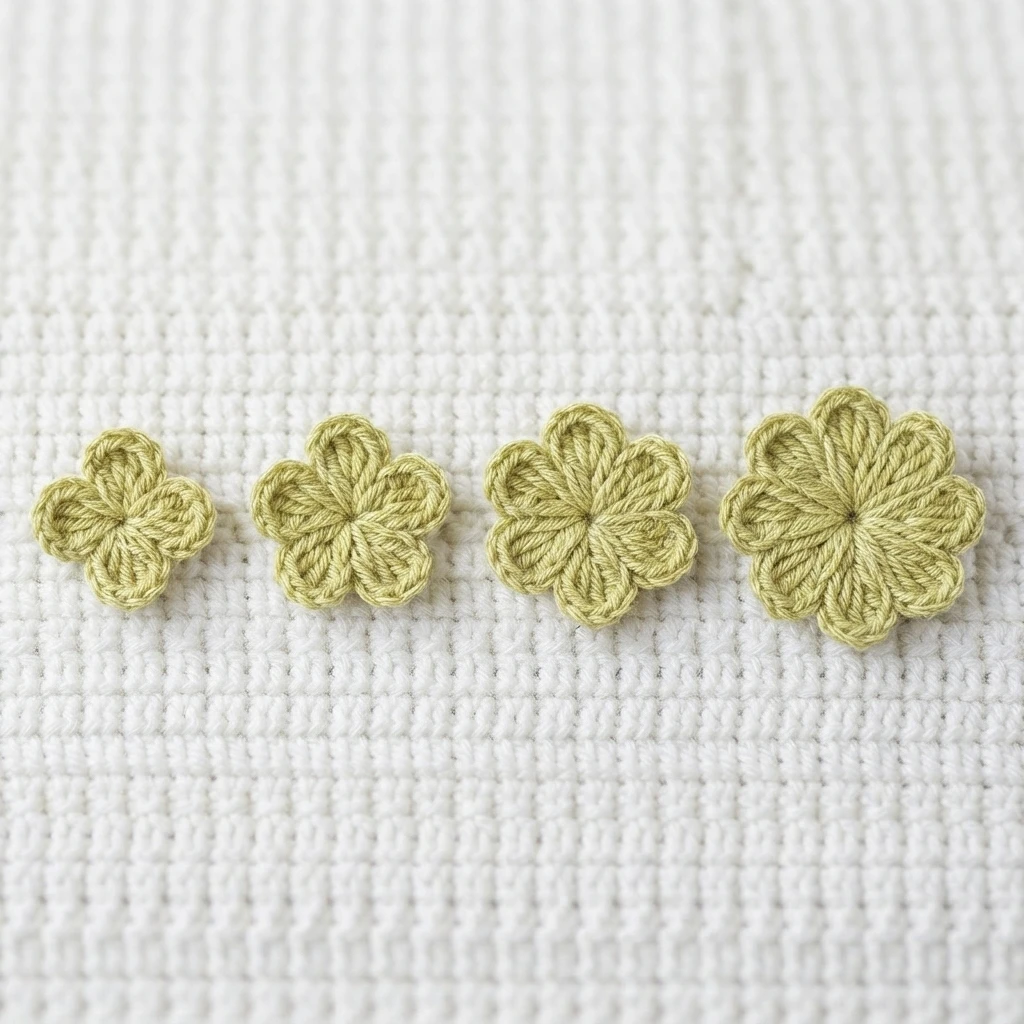

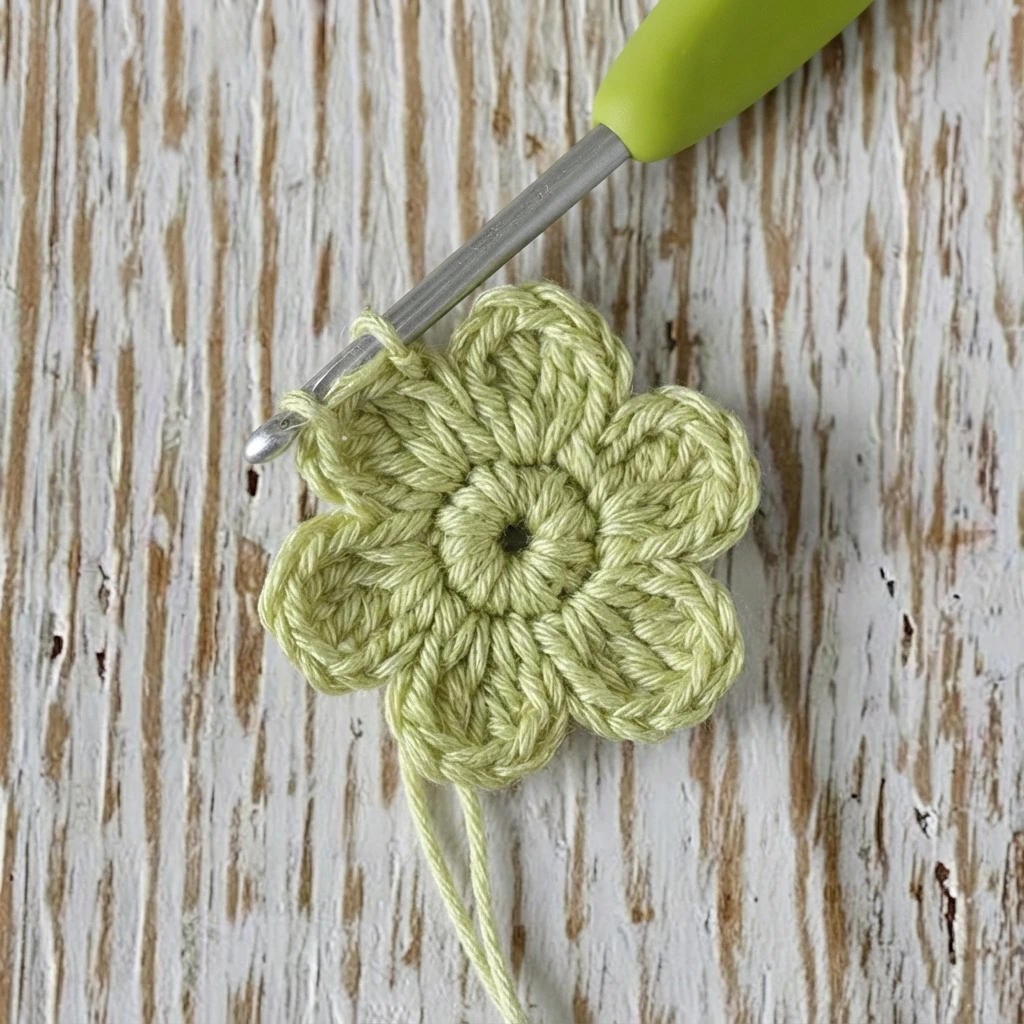
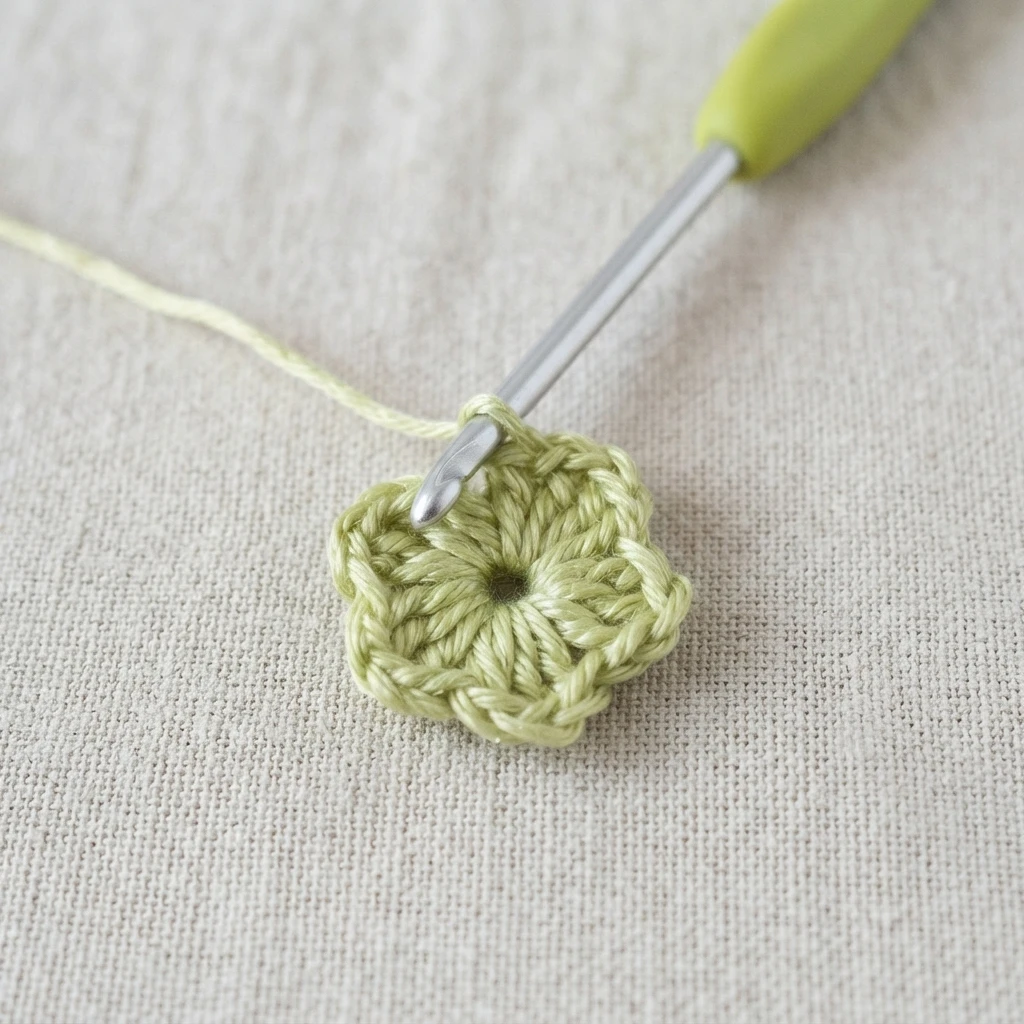

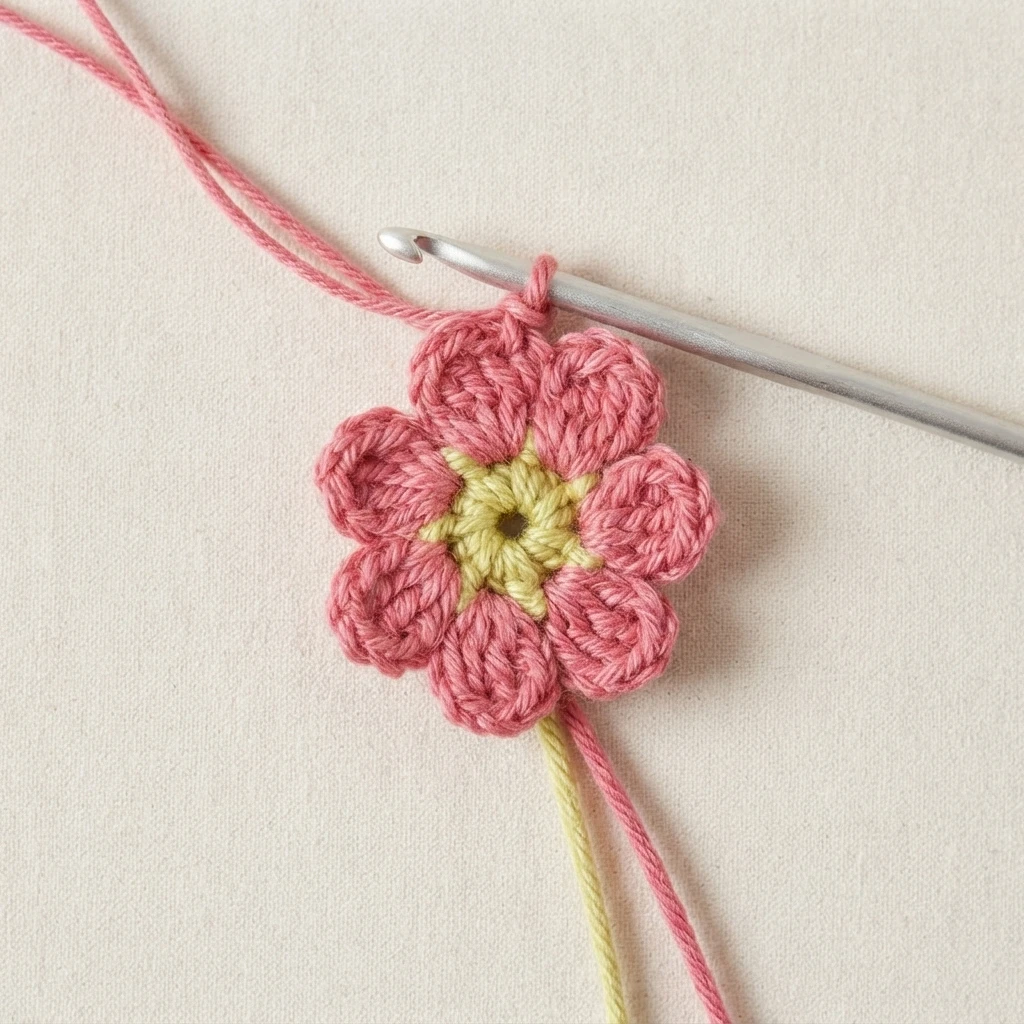
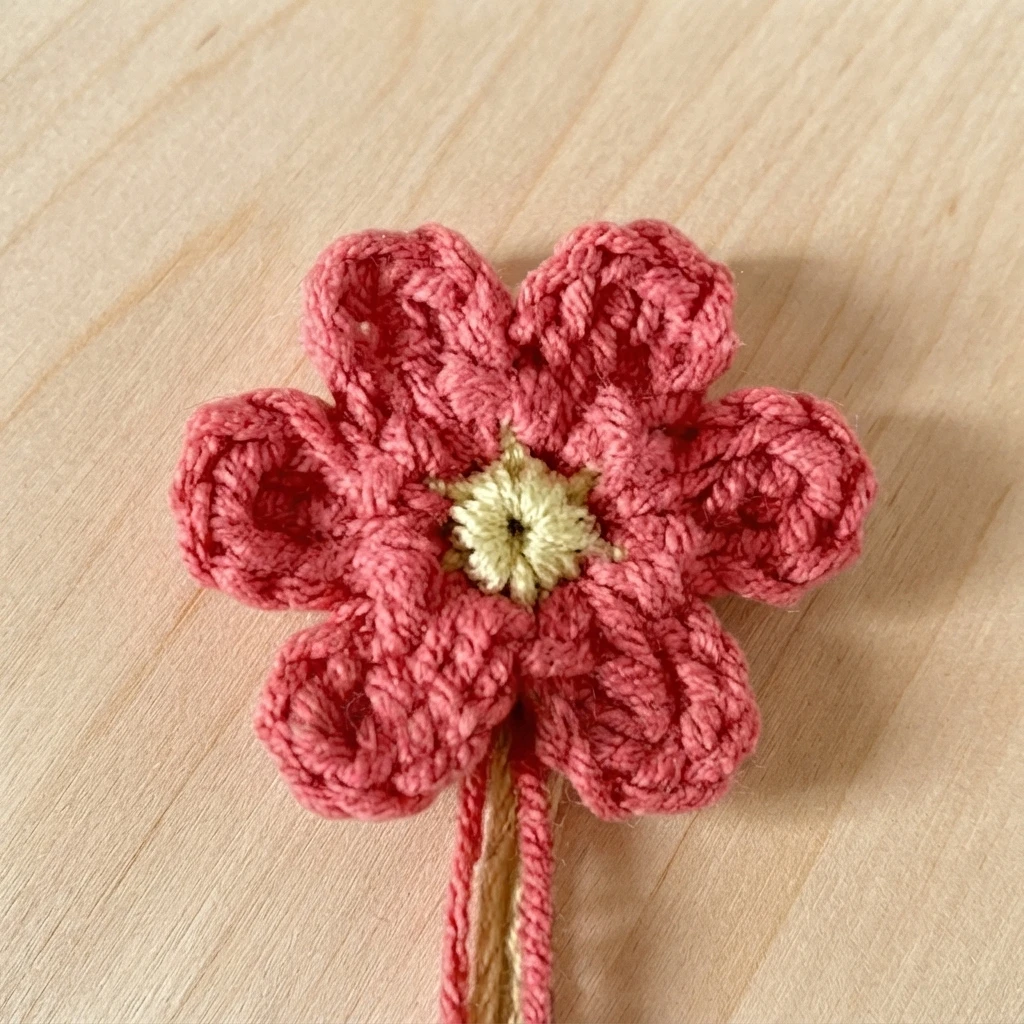
The original version is the 6 petal flower, worked in two rounds from a magic ring start. The first round establishes the center with single crochet stitches and is joined with a slip stitch, and the second round repeats a petal forming sequence around that center. The flower is then fastened off, with the option to leave a long tail for sewing or to weave the tail in.
4 petals crochet flower Pattern Overview
The 4 petal version follows the same two round approach as the original design, with the number of starting single crochet stitches adjusted to match the smaller petal count. It is finished by fastening off, again with a long tail left for sewing or with the tail woven in. Because the source wording for this variation is brief, check the original page for its exact written sequence.
5 petals crochet flower Pattern Overview
The 5 petal version sits between the smallest and original sizes, and it uses the same overall method, with the starting round adjusted for five petals and the petal sequence repeated around the center. Fastening off completes the flower, and the tail can be kept long for sewing or woven in for a neat finish. Use the CraftPassion page to confirm the exact written wording before working it.
8 petals crochet flower Pattern Overview
The 8 petal version is the fullest variation named in the source, again built in two rounds from a magic ring with a larger number of starting single crochet stitches. The petal sequence is repeated around the center, then the work is fastened off and the tail is either left long for sewing or woven in. For this variation especially, follow the original designer page rather than assuming a petal total from the repeat count alone.
Notes
The source note simply directs readers to the full CraftPassion article for the complete pattern, which is the right place to work from if you want the photographs and exact round by round wording. This overview keeps the project facts, supplies, and variations together for planning. For more floral reading, see Granny Flower Pot au crochet: Pattern Overview and Flower Opossum with Baby Bee Possums: Pattern Overview.
Did you make this project?
If you make a flower using the CraftPassion pattern, the source invites you to leave a comment on the original page or share a photo on Instagram. Tagging @craftpassion is requested so the designer can see your finished piece. That invitation belongs to the original source, and it is a simple way to share a small applique, a decorated item, or a whole grouped bouquet.


1 thought on “Crochet Flower: Pattern Overview”