
Project introduction
This article is a pattern overview, not a full tutorial, for the Cottage Bucket Bag shared on Moogly. For the complete steps, see the Original designer’s pattern and instructions. The design pairs a clean, minimalist crossbody shape with bold, touchable texture, finished with a simple leather drawstring and an adjustable strap so the fit can be tuned to the wearer.
Moogly offers this as a free one-skein project, which makes it a tidy choice when you want a useful finished bag without gathering a long shopping list first. The overview below explains what the yarn does in the fabric, which supplies to gather, how the shape is built in broad strokes, and where the designer adds helpful finishing advice for makers.
Soft But Structured
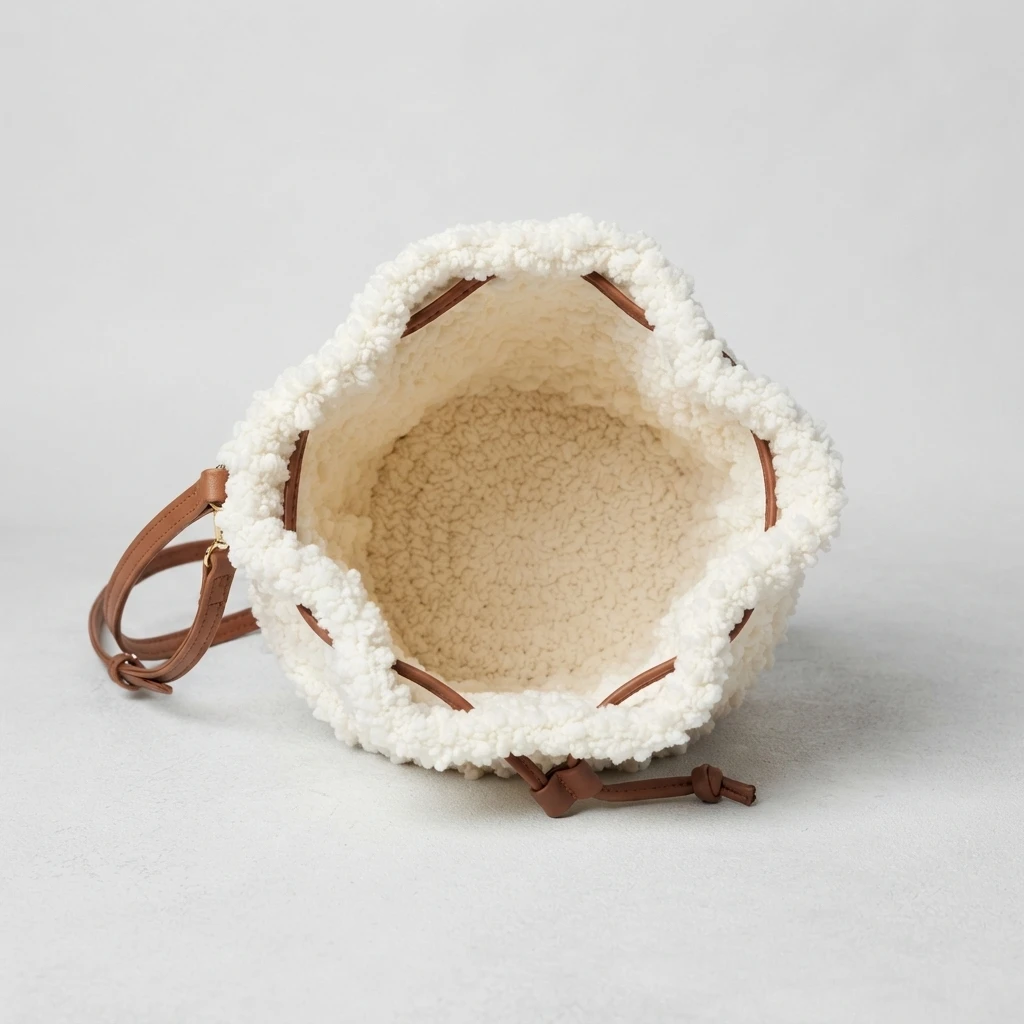

One pleasant surprise in the sample is how well this yarn behaves in a bag shape. Bernat Sheepy feels soft in the hand, yet the stitches form a strong, solid fabric. That balance helps the bucket sit flat on its base and stand up straight, rather than collapsing into a soft puddle when you set it down between uses.
The sample was left unlined at first so the construction could be shown clearly in photos and videos. The designer still plans to add a lining and suggests that makers do the same. A lining helps limit stretching over time and gives extra security for tiny essentials that might otherwise work their way toward the edges of the crocheted fabric.
Add Your Own Touches

Personalizing this bag is easy because the finishing pieces are flexible. The original pattern links to the drawstring and handle used for the sample, but you are free to choose another style you prefer. You could crochet those pieces yourself, change the color story, pick a different shade of Sheepy, or work in stripes for a more playful, custom result.
Cottage Bucket Bag
Before you begin, gather the supplies listed by the designer for the sample shown. The quantities and sizes below apply to that sample, so check the original pattern before making substitutions. A different yarn, drawstring, or handle could change both the finished look of the bag and the way it carries in everyday use.
- Hook: a Susan Bates hook, size US-L (8.0 mm)
- Yarn amount: 120 yds of Bernat Sheepy in Color A, shade Cotton Tail, using 1 ball
- Yarn details: weight category 6, Super Bulky, made from 100% nylon, with a ball put up of 250 g (8.8 oz) and 136 m (149 yds)
- Notions: stitch markers
- Closure piece: a drawstring
- Carry piece: a purse handle
For size, the designer gives a gauge check of 6.5 inches across after Round 4. The finished bag measures approximately 6.5 inches across at the base and 8 inches tall, with that height excluding handles. Treat those figures as sample measurements rather than guarantees, because your personal tension and yarn handling can shift the final result a little.
Helpful links and tutorials
Moogly gathers several support resources alongside the pattern, which is helpful if one of the techniques in this project is new to you. The topics include a dedicated tutorial for this bag, a separate tutorial for sewing in a lining, a general crochet abbreviations reference, and focused help for the magic circle and for completing a seamless join neatly.
- Hdc means half double crochet in US terminology.
- Bphdc means back post half double crochet in US terminology.
Notes and tips
Two simple habits can keep this project on track from round to round. Move a stitch marker along with the first stitch and the last stitch of each round as you work, so the start and end stay easy to find. Count your stitches in every round, and use your fingers to locate the post of each stitch when the texture makes the fabric harder to read.
Crochet the Bag
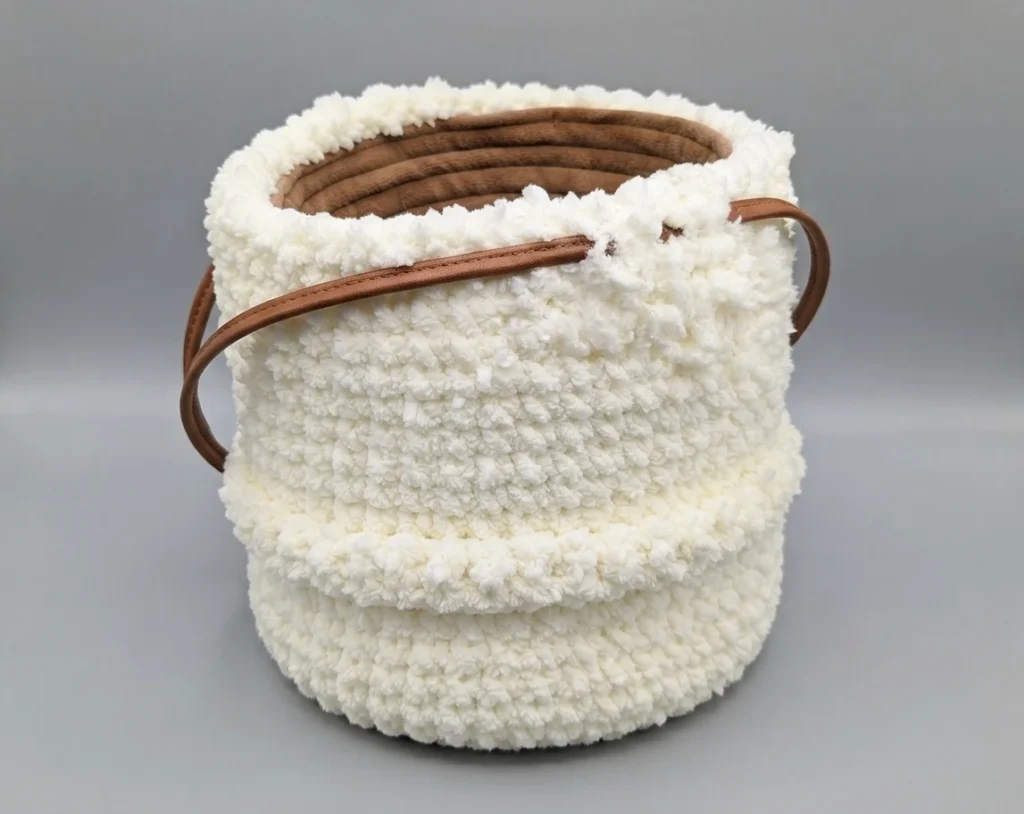
The bag begins at the base with a magic circle and grows outward in joined rounds worked mainly in half double crochet. The early rounds increase in a regular rhythm to create a flat circular bottom, reaching the gauge check point at Round 4. A following round of back post half double crochet then creates a defined transition from base to sides.
After that transition, the body continues in plain half double crochet rounds to build the height of the bucket in a straight, simple fabric. This section continues through Round 14, where the yarn is deliberately left uncut. Keeping the yarn attached at that stage prepares the work for the drawstring step and for the additional rounds that follow afterward.
Add Drawstring and Prep for Finishing

Next, the drawstring is threaded through Round 14, weaving in and out between the posts of the stitches. Position the toggle or drawstring slide so it sits centered opposite the join, then trim the drawstring to length if needed and tie knots at the ends if you like. Markers are also placed at approximately stitches 10 and 30, identifying the sides of the bag when it is flattened.
Back to Crocheting
Crocheting resumes for the final rounds above the drawstring. Round 15 introduces two chain-2 loops within a round of half double crochet, creating the anchor points that will be used later. In Round 16, you work around again while pushing those loops toward the inside of the bag. Round 17 is a final plain round, after which the yarn is broken and a seamless join finishes the edge.
Final Assembly


To assemble the bag, attach the handle to the chain-2 loops positioned inside the bag, which keeps the connection tucked neatly out of sight. If you choose to line your version, the fabric lining is sewn in at Round 13, placing it below the drawstring. With the handle secured and any lining in place, the bucket shape is complete and ready for use.
The fine print
Please respect the designer terms attached to this pattern. The written pattern is copyright Tamara Kelly 2022, all rights reserved, and it should not be reprinted or reposted elsewhere. Instead, share the project by linking to the original page. For questions about selling items made from the pattern or translating it, the designer directs readers to the About page on Moogly. Yarnspirations provided the materials shown in the original post.


1 thought on “Cottage Bucket Bag: Pattern Overview”